The Myth of Satan’s Genealogy: Metaphor, Fiction, and Religious Doctrine
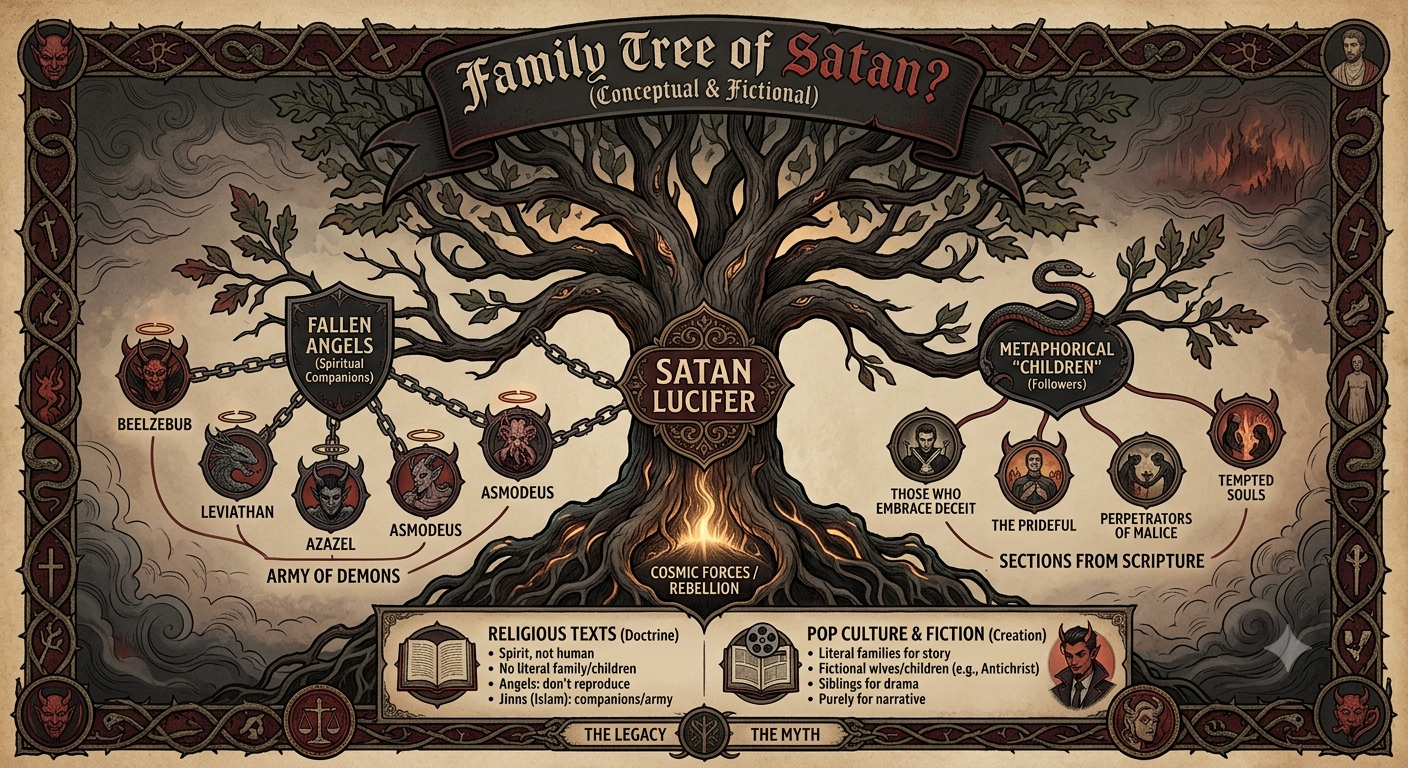
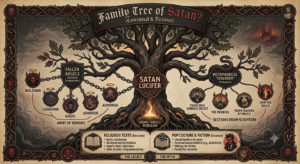
The idea of a “family tree of Satan” is fascinating, but it is important to understand that Satan has no family in the human or biological sense of the word. He is not a figure with a genealogy full of parents, grandparents, siblings, or children, as we know them.
The concepts of Satan’s “family” or “offspring” are almost always metaphorical or derived from later fiction and literature, not from the original religious doctrines.
Below is an overview of how different sources approach this concept:
1. In Religious Texts (Original Doctrine)
In the Abrahamic religions (Judaism, Christianity, and Islam), Satan is a spiritual being, not a human being. According to these traditions, spiritual beings do not have families.
- Christianity & Judaism (Bible):
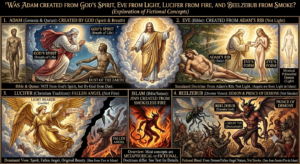
- Angels: Satan is often viewed as a fallen angel (originally named Lucifer). Angels are beings created by God. The Bible teaches that angels do not marry and do not reproduce (Matthew 22:30). Satan, therefore, has no parents and no literal children.
- Metaphorical Children: The terms “children of the devil” (1 John 3:10) or “offspring of the serpent” are used. These are people who, through their actions, lies, or malice, identify with Satan or follow him, rather than having a literal genetic connection.
- Islam (Quran):
- Iblis: In Islam, Satan is called Iblis. He is not a fallen angel, but a Jinn (a spiritual being created from smokeless fire). Jinns, unlike angels, do possess a free will of their own and can reproduce.
- Jinns: The Quran speaks of the offspring or followers of Iblis among the Jinns (Quran 18:50). This is viewed as an army of Jinns who help him in his attempts to mislead humans. However, they do not form a “family” in the human sense.
2. In Literature, Myths, and Pop Culture (Fictional Concepts)
The idea that Satan has a family has become popular primarily in the centuries following the religious scriptures, through literature and, more recently, movies and TV series. Here, Satan becomes a character with human traits.
- Classical Literature (e.g., Dante, Milton): In masterpieces like Paradise Lost by John Milton, Satan is described with profound emotions, pride, and a rebellious spirit. Although he has no genealogy, he has “companions” (the other fallen angels) who form a kind of spiritual family.
- Folklore & Myths: Sometimes the “wife of the devil” (such as Lilith in some Jewish folklore traditions, though her role is more complex) is mentioned.
- Modern Pop Culture (Series, Movies, Comics): In modern media (think of series like Lucifer, Chilling Adventures of Sabrina, or countless horror movies), the devil is often portrayed as a character with a complex literal family:
- Siblings (other angels or demons).
- A wife or mistress.
- Children (the “seed of Satan”): This is a very popular theme in the horror genre (e.g., Rosemary’s Baby), where a human woman becomes pregnant by the devil to bring the Antichrist into the world. This is pure fiction.
Summary Overview
| Context | Concept of Satan’s “Family” | Meaning |
| Religious Texts (Bible/Quran) | No literal family tree. Angels (Christianity) do not reproduce. Jinns (Islam) have followers/offspring among their own kind. | Metaphorical (followers) or spiritual companions. |
| Classical Literature | Rebellious spiritual hierarchy. No biological ties. | A “family” of fallen angels based on a shared rebellion. |
| Pop Culture & Fiction | Often a literal, complex family. Wives, children, siblings. | A creative tool to introduce human drama and conflict into a supernatural story. |