What is life timeline?
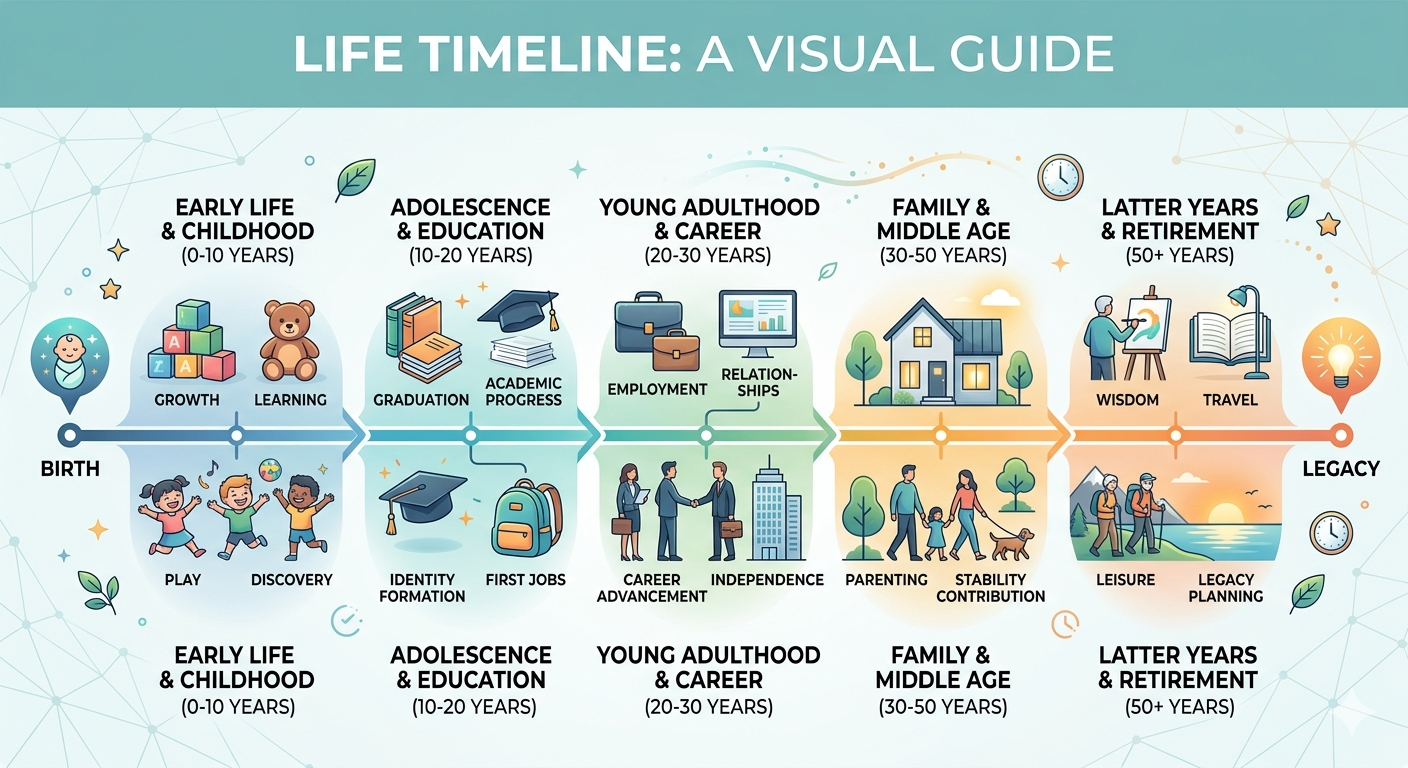
A life timeline is a visual representation of the significant events, milestones, and periods that occur throughout a person’s life. It typically arranges these moments chronologically, offering a bird’s-eye view of a person’s entire journey from birth onward.
This type of “visual guide” helps clarify how different experiences connect, making complex personal history easier to understand and reflect upon.
Core Purpose and Utility
A life timeline serves several useful purposes:
- Self-Reflection and Storytelling: By mapping out your life, you can better understand your personal growth and the narrative that defines who you are.
- Planning and Goal Setting: Businesses often use timelines to project future revenue. Similarly, you can use a life timeline to visualize your aspirations (e.g., career changes, education, starting a family) and set realistic goals.
- Therapeutic Tool: Counselors sometimes use life timelines to help clients identify pivotal experiences or patterns that have shaped their current well-being.
- Legacy Planning: As you look toward your latter years, a timeline can help you organize your achievements, contributions, and the values you wish to pass on.
Typical Milestones in a Life Timeline
While every life is unique, most human experiences align with common phases of development:
1. Early Life & Childhood (0–10 Years)
This foundation period is characterized by rapid physical and cognitive growth. The focus is on learning the basics of survival, communication, and basic social rules through play and discovery.
2. Adolescence & Education (10–20 Years)
This transition phase involves puberty, emotional maturation, and increasing independence. Milestones center on formal education, identity formation, and exploring potential career paths.
3. Young Adulthood & Career (20–30 Years)
This period involves solidifying independence. The focus is often on securing employment, advancing in a career, and building significant personal relationships, including marriage or committed partnerships.
4. Family & Middle Age (30–50 Years)
Mid-life frequently involves “settling down.” Responsibilities expand to include parenting, homeownership, and achieving stability while making contributions to your profession and community.
5. Latter Years & Retirement (50+ Years)
This stage shifts from active work toward leisure, travel, and enjoying the fruits of earlier efforts. It is a time for gaining wisdom, reflecting on life’s achievements, and planning the legacy you leave behind.
Creating Your Own Life Timeline
If you are interested in mapping your own journey, you can start with three simple steps:
- Identify Pivotal Moments: Reflect on your highest peaks (great achievements or joys) and deepest valleys (significant challenges or losses). These form the anchor points.
- Choose a Format: You can use a simple line drawing, digital software (like Excel or specialized timeline apps), or a physical poster board.
- Add Context: For each event, add the approximate date, a brief description, and perhaps why it was significant to you.




Post Comment
You must be logged in to post a comment.