What if there is no more food in the world?
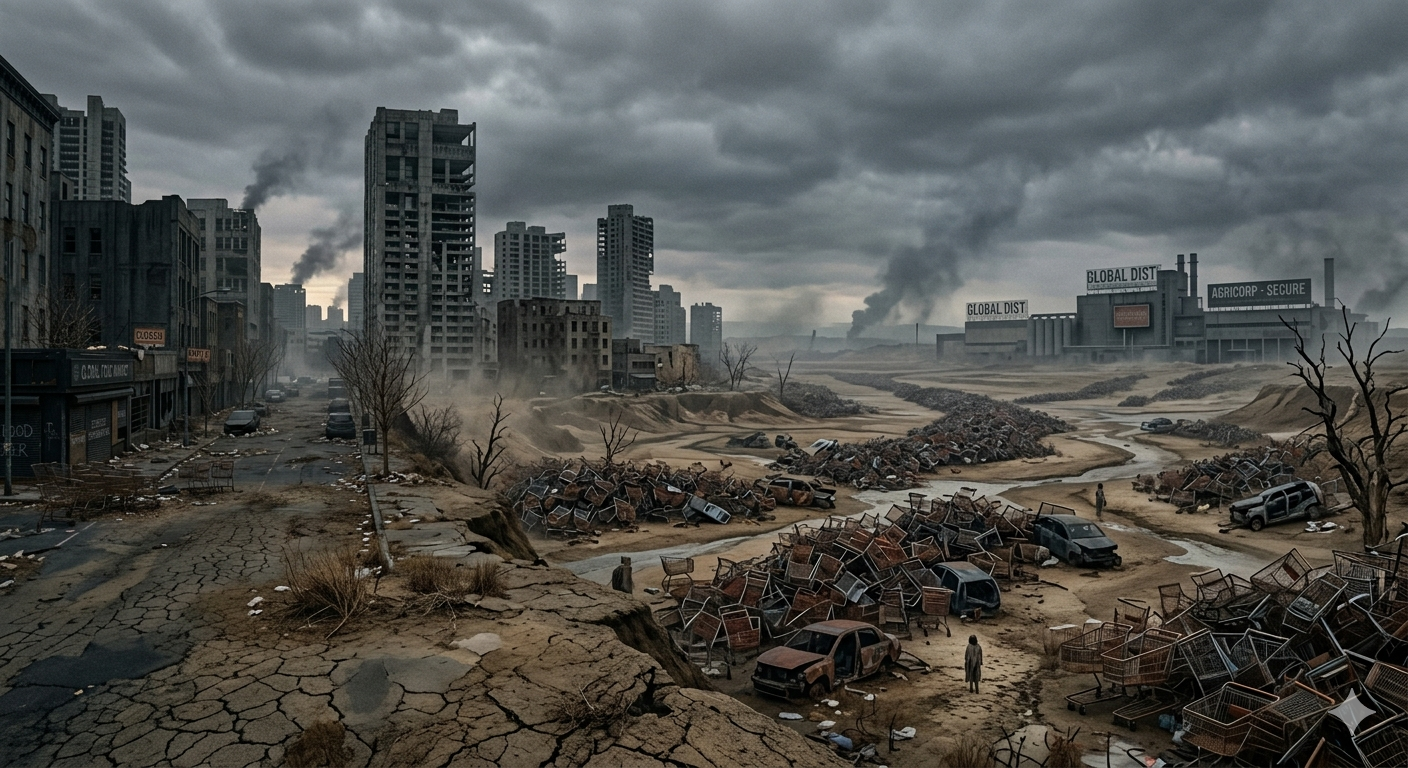
If there were no more food in the world, the consequences would be catastrophic and lead to the rapid collapse of human civilization and most complex life on Earth.
Here’s a breakdown of what would likely happen:
- Immediate Starvation and Death:
- Within days, people would begin to experience severe hunger.
- Within weeks, widespread starvation would lead to mass deaths. The most vulnerable (children, elderly, ill) would be the first to succumb.
- People would quickly deplete any existing reserves in homes, supermarkets, and warehouses.
- Societal Collapse:
- Breakdown of Order: Governments and law enforcement would quickly lose control. With no food, there would be no incentive to maintain order.
- Violence and Anarchy: Desperation would lead to widespread looting, violence, and conflict over any remaining edible items. People would turn on each other.
- Infrastructure Failure: Without people to maintain them, power grids, water treatment plants, transportation systems, and communication networks would fail.
- Migration: People would desperately try to find food, leading to massive, unorganized migrations, only to find the same conditions elsewhere.
- Ecological Collapse:
- Animal Starvation: All animals (herbivores, carnivores, omnivores) would also starve to death. The entire food web would unravel.
- Plant Life: The question “no more food” often implies an absence of organic matter usable for energy. If this extends to the mechanisms for plants to grow (e.g., lack of sunlight, water, nutrients in the soil, or CO2), then plant life would also perish, leading to a sterile planet. If plants could still grow but there was no “food” for animals, then the planet would be covered in plants, but all animal life would still die. Assuming “no more food” means no more sustenance for any life that relies on consuming something, then even plant life would eventually cease to exist as their energy sources are depleted or mechanisms to use them fail.
- Extinction:
- Human Extinction: Within a relatively short period (months to a couple of years at most), the entire human population would perish due to starvation, disease, violence, and the inability to sustain life.
- Extinction of Most Complex Life: Mammals, birds, fish, reptiles, amphibians, and most insects would also die out.
- Microbial Life: Some extremophiles and chemosynthetic microbes might survive if they can derive energy from inorganic chemical reactions, but the vast majority of life as we know it would cease to exist.
In essence, a world without food would become a barren, silent planet devoid of most life, resembling early Earth or a distant, uninhabitable world. It’s a scenario that highlights the fundamental importance of our food systems and the delicate balance of Earth’s ecosystems.




Post Comment
You must be logged in to post a comment.