What is the difference between heaven and hell?
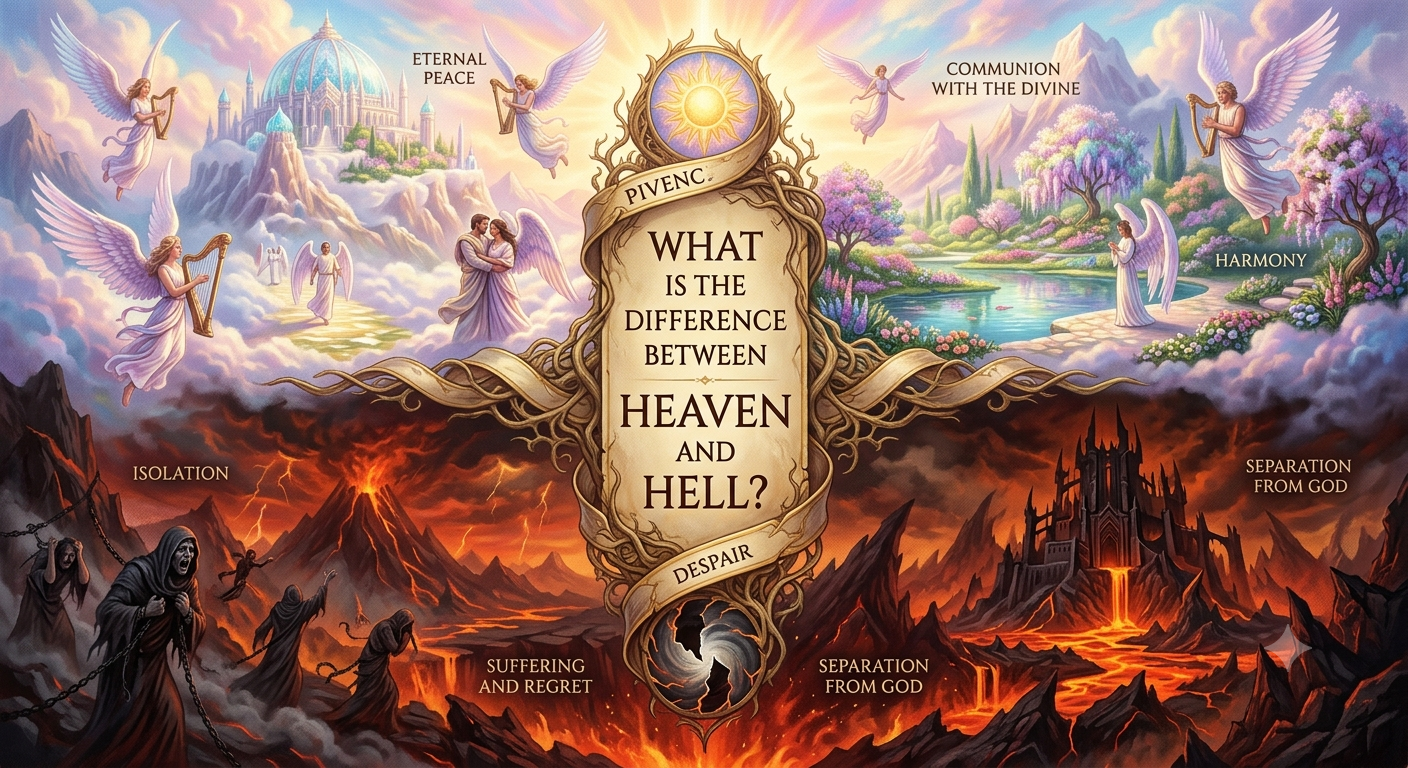
While exact definitions vary depending on religious, philosophical, or cultural traditions, heaven and hell are generally understood as contrasting ultimate spiritual destinations or states of being.
Here is how they are typically compared across major frameworks:
Key Differences
| Feature | Heaven | Hell |
| Core Concept | Ultimate reward, harmony, and eternal peace | Ultimate punishment, torment, and eternal separation |
| Relationship to Divine | Total union and closeness with God or the supreme reality | Complete separation or alienation from God/the Divine |
| Emotional State | Pure joy, fulfillment, rest, and contentment | Guilt, regret, despair, and suffering |
| Symbolism | Light, height (sky/upward), paradise, garden, perfection | Darkness, depths (underworld/downward), fire, chaos |
Perspectives Across Traditions
1. Abrahamic Religions (Christianity, Islam, Judaism)
- Heaven: Often depicted as a place or state of eternal life where the righteous dwell in the presence of God, free from pain, death, and suffering. (In Islam, it is Jannah; in Christianity, the Kingdom of Heaven or New Jerusalem).
- Hell: Generally viewed as a state or place of divine judgment for unrepentant evil. (In Islam, Jahannam; in Christianity, Hell or Gehenna). Some traditions emphasize physical torment, while modern interpretations often view hell primarily as the agonizing realization of eternal separation from God’s love.
2. Eastern Traditions (Hinduism, Buddhism)
- Temporary Realms: Unlike Abrahamic traditions, heaven (Svarga) and hell (Naraka) in these faiths are often seen as temporary stopovers in the cycle of rebirth (Samsara).
- Driven by Karma: Positive actions lead to higher, heavenly realms, while negative actions lead to lower, hellish realms. However, the ultimate goal in both traditions is to transcend both realms entirely to achieve liberation (Moksha or Nirvana).
3. Philosophical & Psychological Views
- States of Mind: Existential and secular perspectives often interpret heaven and hell metaphorically as internal human experiences. Heaven represents inner peace, alignment with purpose, and self-actualization, while hell represents intense remorse, isolation, anxiety, and self-created suffering in life.