How was football invented?
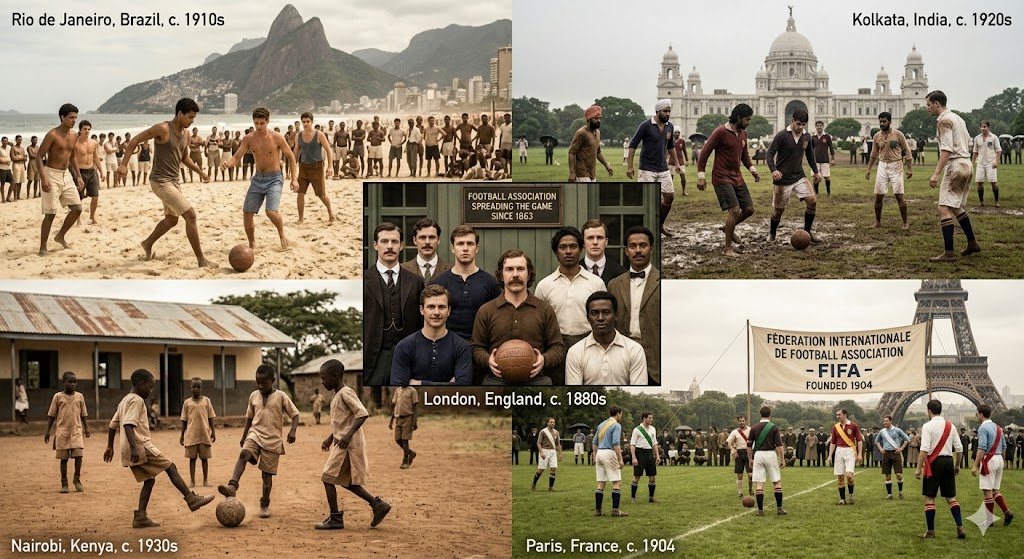
The short answer is that human beings have been kicking balls around for thousands of years, but the modern game of football (soccer) was officially invented in 1863 in London, England.
To understand how it became the sport we know today, it helps to look at it in three distinct phases: the ancient roots, the chaotic middle ages, and the formal “invention” in Victorian England.
1. The Ancient Roots (Before 1800)
People have always loved kicking things. FIFA officially recognizes an ancient Chinese game called Cuju (which translates literally to “kick ball”) as the earliest organized form of the sport.
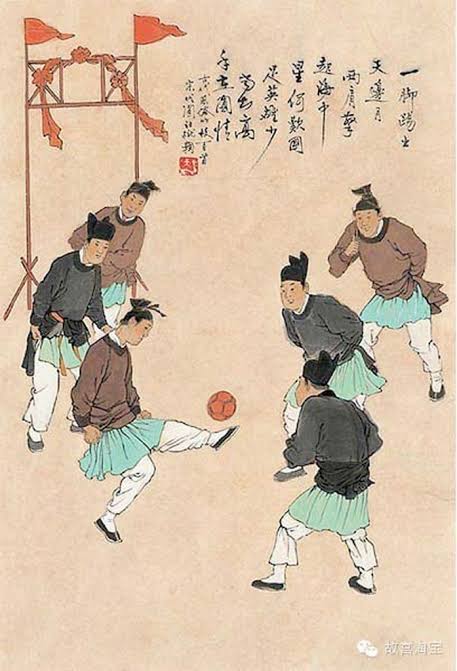
Ancient Cuju match in China. Source: SIA Academy
- Cuju (China, 3rd–2nd Century BC): Played during the Han Dynasty, military players used a leather ball filled with feathers. The goal was to kick it through a small opening in a net strung between high bamboo canes—without using hands.
- Harpastum (Ancient Rome): The Romans played a much more violent, rugby-like handling game. As the Roman Empire expanded, they introduced variations of this ball game to the British Isles.
2. Medieval “Mob Football” (14th–18th Century)
In medieval England, football wasn’t a civilized sport—it was closer to a localized riot.
Entire towns would compete to drag, carry, or kick a pig’s bladder to a designated landmark (like the rival village’s church balcony). There were almost no rules, hundreds of players took part at once, and property damage, broken bones, and occasional deaths were common. It was so disruptive that various British kings tried to ban it over 30 times because it distracted men from practicing archery for the military.
3. The 1863 “Invention” of the Modern Game
The real turning point happened in the mid-19th century. English private boarding schools (like Eton, Harrow, and Rugby) used football to keep young boys disciplined and fit. However, every single school played by their own totally different rules. Some allowed carrying the ball; some only allowed kicking.
When these boys graduated and went to universities like Cambridge, they couldn’t play against each other because nobody could agree on the rules.
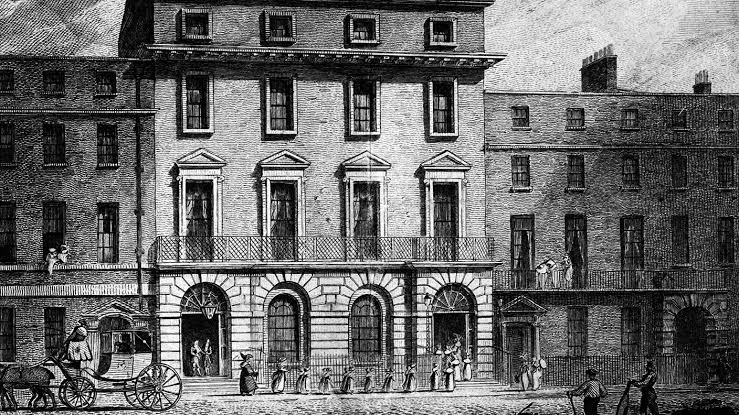
The Freemasons’ Tavern, London. Source: MoneyWeek
To fix this chaos, a group of captains and representatives from various clubs met on October 26, 1863, at the Freemasons’ Tavern in London. They formed the Football Association (FA) with one main goal: write a single, definitive rulebook.
The Great Divorce: Football vs. Rugby
During these intense meetings, a massive argument broke out over two specific rules:
- Whether players should be allowed to run with the ball in their hands.
- Whether “hacking” (kicking an opponent squarely in the shins) should be legal.
The FA decided to ban both handling the ball and shin-kicking. The representative from the Blackheath club got angry, walked out of the meeting, and went on to help create the sport of Rugby.
The clubs that stayed signed off on the official rules, naming their game “Association Football” to distinguish it from Rugby.
Where did the word “soccer” come from? Nineteenth-century Oxford university students loved adding “-er” to nicknames. They shortened “Association Football” to “Assoc,” which eventually morphed into “soccer.” It remains a deeply British slang term that was later exported across the Atlantic!
How the Rules Evolved
The 1863 rulebook wouldn’t look entirely familiar to you today. It took a few more decades to shape the exact game we watch now:
- 1871: The Goalkeeper position was introduced, making them the only player allowed to handle the ball (and originally, they could do it anywhere in their half!).
- 1872: The first official FA Cup tournament was played, and the size of the ball was officially standardized.
- 1891: The Penalty Kick and referee whistles were introduced to curb rough defending near the goal line.
- 1904: FIFA (Federation Internationale de Football Association) was founded in Paris to manage international matches, turning a British invention into the world’s game.







Post Comment
You must be logged in to post a comment.