Animals on world?
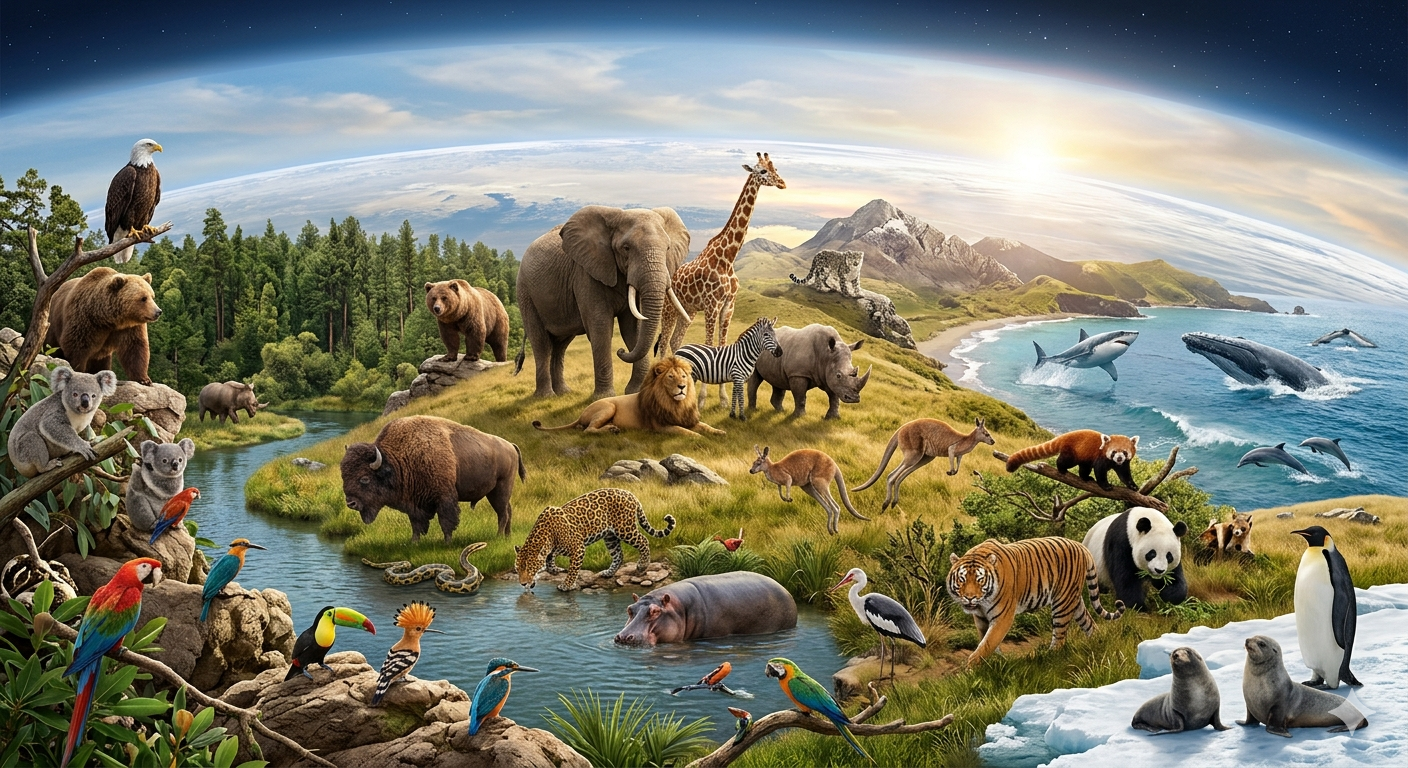
The animal kingdom on Earth is massive, diverse, and full of surprises. To put it simply: the world is absolutely crawling with life, and we humans have only scratched the surface of what’s out there.
Here is a breakdown of what the animal kingdom looks like across our planet.
By the Numbers: Known vs. Unknown
Scientists have officially found, named, and studied about 1.5 million to 2.1 million living animal species. However, researchers estimate that there are actually around 8.7 million total species on Earth. That means roughly 80% of the planet’s creatures are still waiting to be discovered!
How Animals are Grouped
When you think of “animals,” your mind probably goes straight to furry mammals or birds. In reality, the vast majority of animals don’t even have a backbone.
1. Invertebrates (No Backbone) — ~95% of all animals
This is the true majority on Earth.
- Insects: With over 1 million described species, insects (like beetles, ants, and butterflies) rule the planet in sheer variety.
- Arachnids & Myriapods: Spiders, scorpions, and centipedes.
- Mollusks: Snails, clams, and highly intelligent ocean dwellers like octopuses and squids.
- Crustaceans: Crabs, lobsters, and shrimp.
2. Vertebrates (With a Backbone) — ~5% of all animals
Even though they make up a small percentage of species, these are usually the most familiar to us.
- Mammals (~6,800 species): Humans, elephants, whales, dogs, and bats.
- Birds (~11,000 species): From tiny hummingbirds to giant ostriches.
- Reptiles (~12,500 species): Snakes, lizards, turtles, and crocodiles.
- Amphibians (~8,900 species): Frogs, toads, and salamanders.
- Fish (~37,000 species): Sharks, salmon, and everything in between, making them the largest vertebrate group.
Animals by Continent
Every corner of the globe has evolved its own unique wildlife based on the climate and habitat:
| Continent | Iconic Animals | Unique Feature |
| Africa | Lions, African Elephants, Giraffes, Gorillas | Home to the world’s largest land mammals and massive open-savanna ecosystems. |
| Asia | Giant Pandas, Tigers, Red Pandas, Orangutans | Features incredibly diverse environments, from freezing Siberian forests to tropical rainforests. |
| Australia | Kangaroos, Koalas, Platypuses | Isolated for millions of years, leading to a unique population dominated by marsupials (pouched mammals). |
| Americas | Grizzlies, Jaguars, Bald Eagles, Capybaras, Bisons | Spans from Arctic polar bears in the north down to the incredibly dense Amazon rainforest in the south. |
| Europe | Brown Bears, Wolves, Eurasian Lynxes, Red Deer | Dominated by temperate forest and mountain animals that have adapted alongside human civilization. |
| Antarctica | Penguins, Seals, Orcas, Blue Whales, Krill | No permanent land mammals exist here; the entire food chain relies directly on the freezing ocean. |






Post Comment
You must be logged in to post a comment.