Prophets who have come into the world?
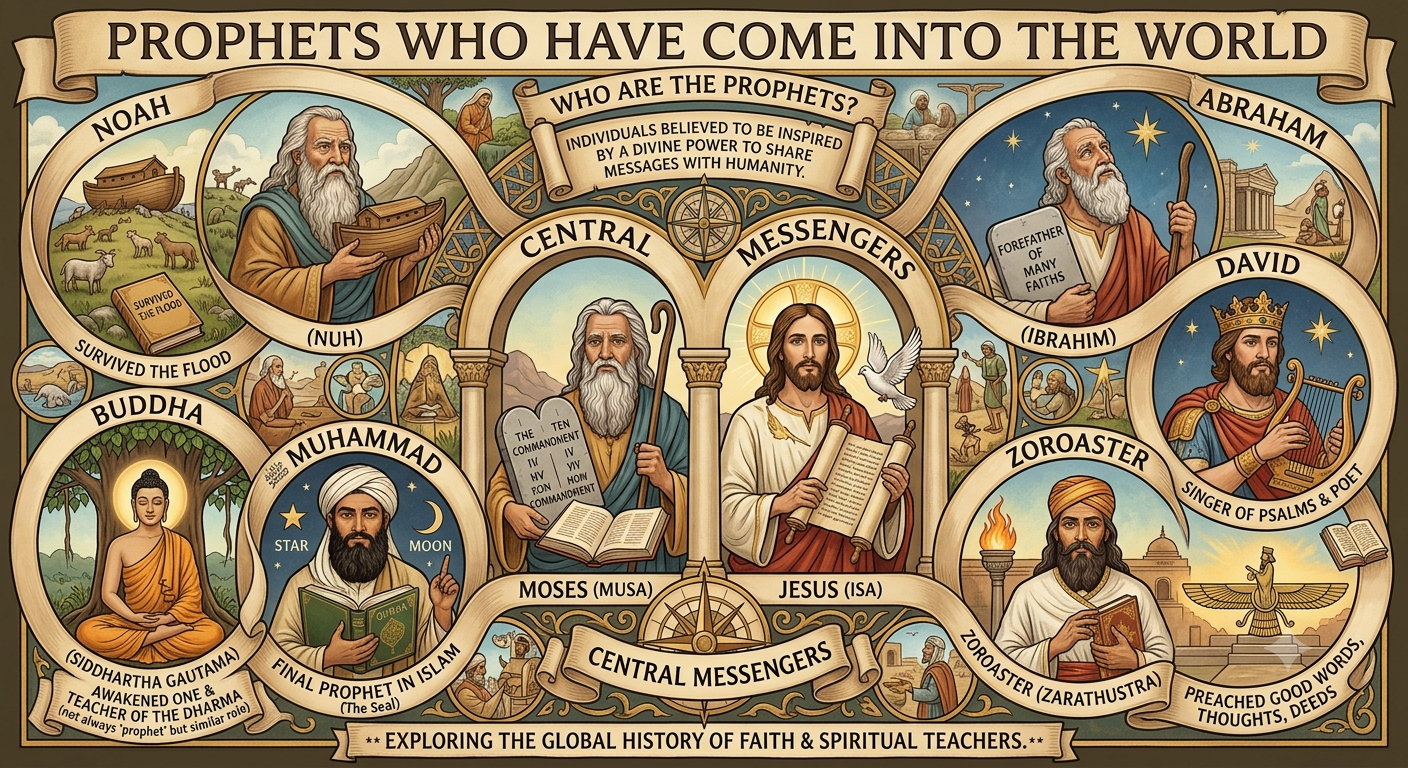
Numerous prophets have come into the world throughout history, particularly within the Abrahamic religions (Judaism, Christianity, and Islam). Although these religions share a common foundation, their lists of prophets and the roles they play differ.
Additionally, there are prophetic figures outside of these traditions. Below is an overview of the most important prophets per religion and the prophets they have in common.
Common Prophets (Abrahamic Tradition)
Many prophets are recognized by Jews, Christians, and Muslims alike, although their names are sometimes spelled differently and their roles are interpreted differently.
| Figure (Biblical/Dutch) | Islamic Name | Importance in the tradition |
| Noah | Nuh | Survived the Great Flood with the ark. |
| Abraham | Ibrahim | Forefather of many nations and a symbol of monotheism. |
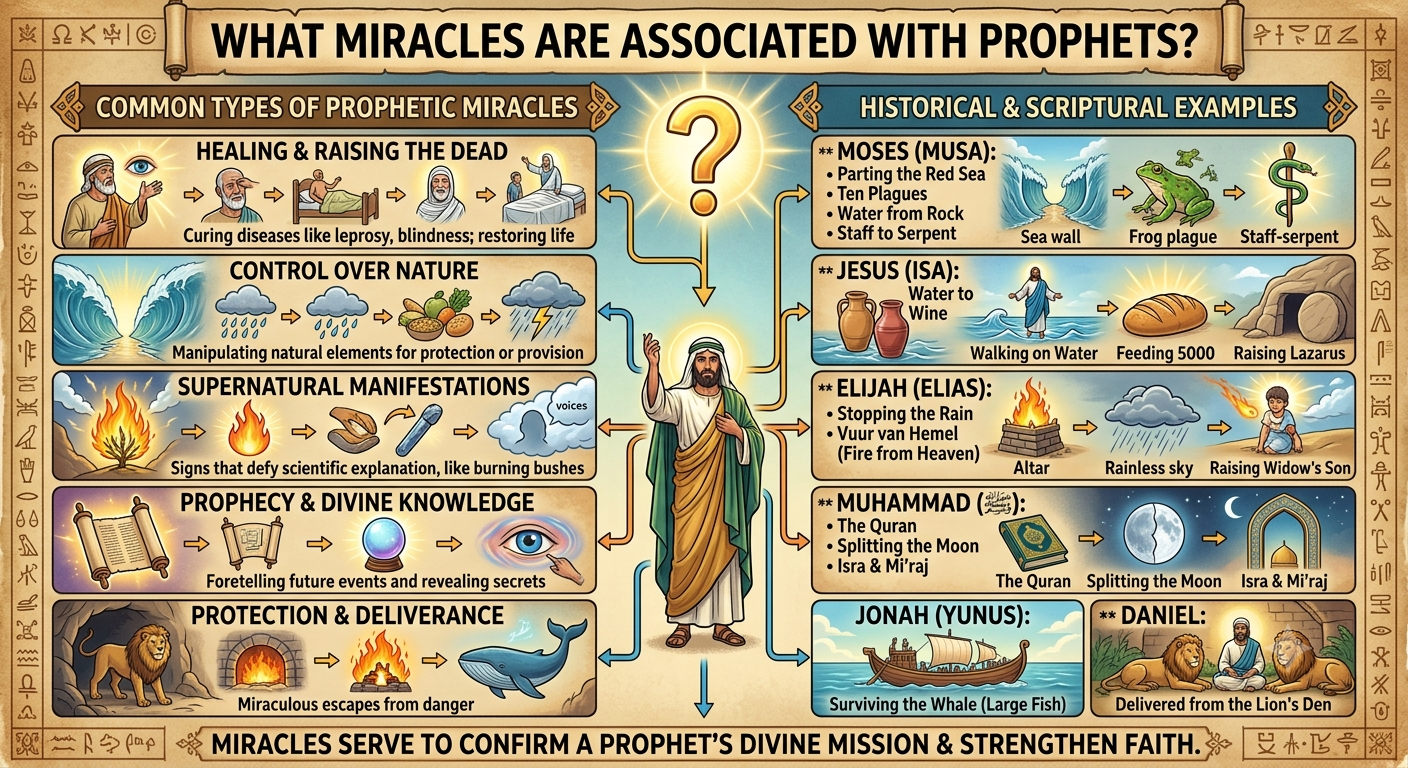
| Moses | Musa | Received the Ten Commandments and led the Israelites out of Egypt. |
| David | Dawud | King of Israel, to whom the Psalms are attributed. |
| John the Baptist | Yahya | Forerunner of Jesus, who called people to repentance. |
| Jesus | Isa | Central to Christianity; a very important prophet in Islam. |
Prophets in Judaism
In Judaism, prophets (nevi’im) are men and women who received a direct message from God to lead, warn, or comfort the people of Israel. The Jewish Bible (Tanakh) contains books attributed to them.
- Moses: The most important prophet, the only one who spoke directly with God.
- Other early prophets: Samuel, Elijah, Elisha.
- Writing prophets: Isaiah, Jeremiah, Ezekiel (the ‘Major Prophets’) and twelve ‘Minor Prophets’ such as Hosea, Amos, Jonah, and Malachi.
- Female prophets: The Tanakh also mentions female prophets, such as Deborah, Miriam, and Huldah.
Prophets in Christianity
Christianity recognizes all the prophets from Judaism (the Old Testament). For Christians, the line of Old Testament prophets ends with John the Baptist, who announced the coming of Jesus.
- Jesus Christ: For Christians, Jesus is not just a prophet, but the Son of God and the Messiah. He is the ultimate revelation of God to humanity.
- Prophecy in the New Testament: After Jesus, the New Testament still speaks of the gift of prophecy within the early church, but these figures do not have the same status as the Old Testament prophets.
Prophets in Islam
In Islam, belief in prophets (nabi) and messengers (rasul) is a fundamental part of the faith. A messenger is a prophet who has also been given a holy book. Muslims believe that God has sent prophets to every nation throughout history.
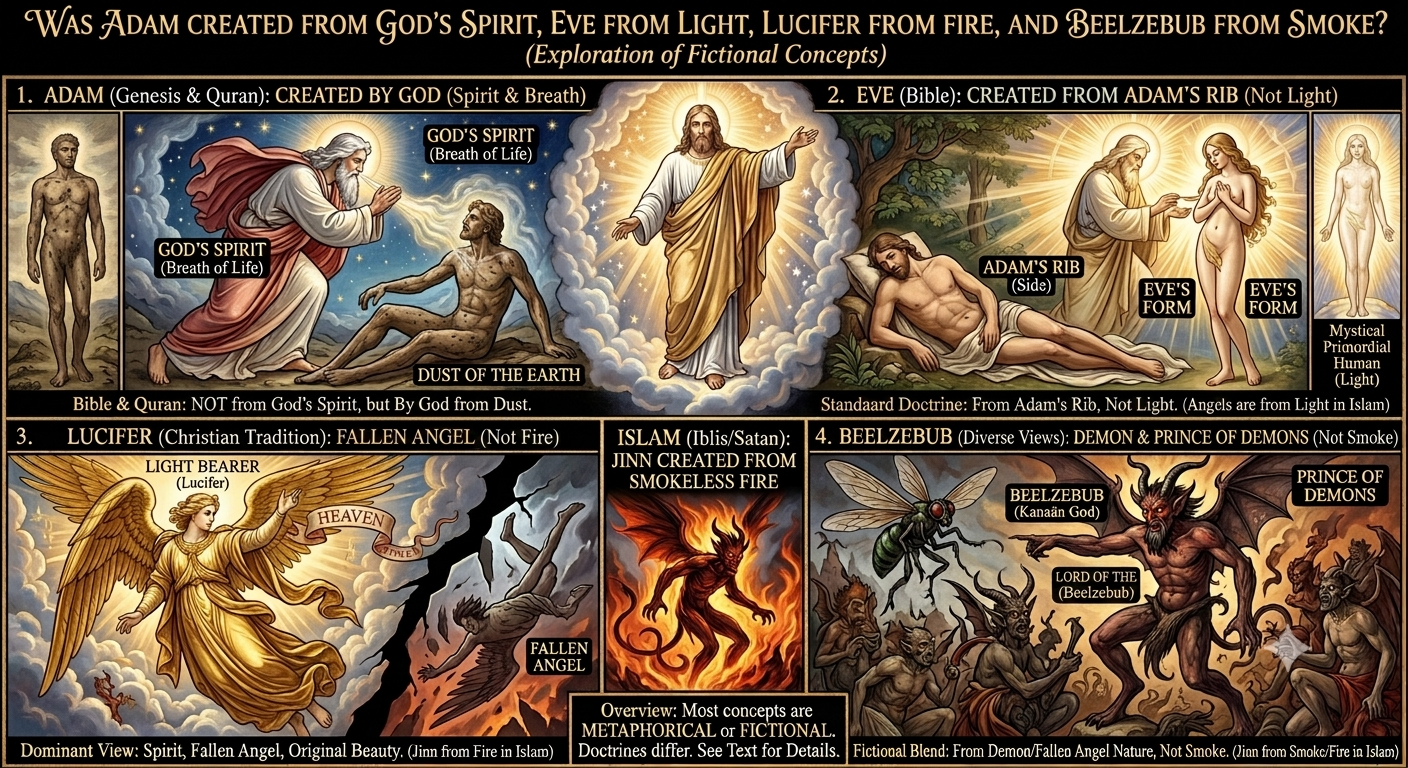
- Adam: The first human and the first prophet.
- Muhammad: For Muslims, he is the final prophet (the ‘Seal of the Prophets’). He received the revelation of the Quran.
- Other important Islamic prophets: In addition to the common prophets, Islam also recognizes prophets that do not appear in the Bible, such as Hud and Salih.
Prophetic Figures in Other Religions
Outside the Abrahamic traditions, there are also figures who have played a comparable role as founders or reformers of religions, although they are not always called ‘prophets.’
- Zoroaster (Zarathustra): Founder of Zoroastrianism in ancient Persia. He preached monotheism long before the rise of the Abrahamic religions.
- The Buddha (Siddhartha Gautama): Though not seen as a prophet bringing a message from a God, he is seen in Buddhism as an ‘Awakened One’ who taught the path to enlightenment (Dharma).
- Confucius and Lao Tzu: In China, these figures are seen as wise teachers and philosophers who provided fundamental guidelines for society and life, but not directly as prophets in the religious sense.