Why do Satan’s devils offer sacrifices, and how do they do it?
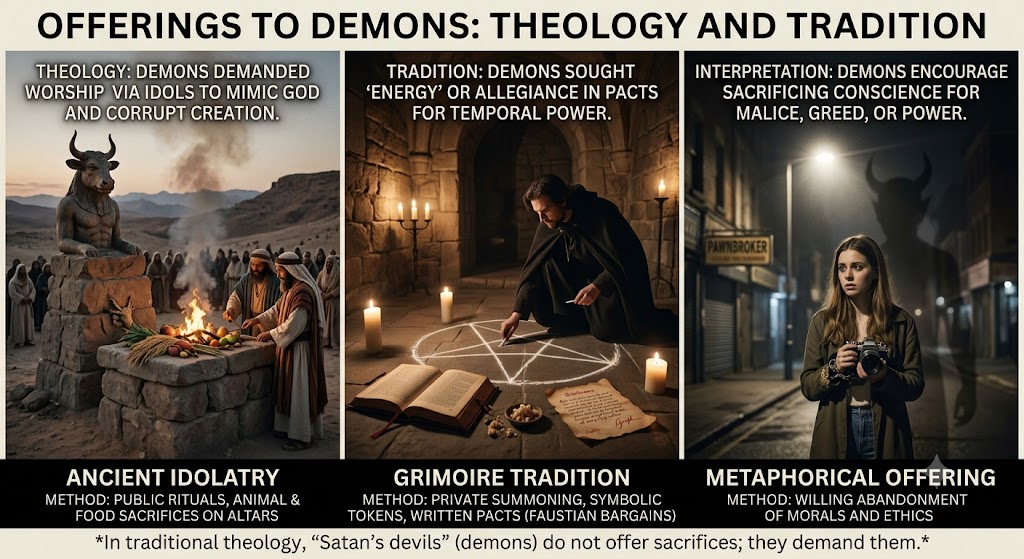
In traditional theology, demonology, and folklore, the concept of “Satan’s devils” (demons) and sacrifices operates on a specific premise: demons do not offer sacrifices; they demand them.
As fallen angels or malevolent spirits, they view themselves as entities to be worshiped, attempting to mimic or usurp the rituals reserved for God.
Here is a breakdown of why these sacrifices are sought according to theological and occult traditions, and how they are supposedly carried out.
Why Sacrifices Are Demanded
In various religious texts (such as the Bible) and historical occult traditions, demons are said to crave or demand sacrifices for several key reasons:
- Usurping Worship and Pride: In Abrahamic theology, Satan’s primary sin is pride—the desire to be exalted like God. By demanding sacrifices, demons attempt to steal the worship, reverence, and devotion that believers naturally give to the Creator.
- Spiritual Defilement and Spite: In Christian demonology, demons are already condemned and cannot be redeemed. Because they hate humanity (who are made in the image of God), they demand horrific or forbidden acts—such as the biblical accounts of sacrifices to false idols like Moloch or Baal—to permanently separate human souls from God and corrupt creation.
- The Concept of “Energy” or Sustenance: In occult lore and ceremonial magic, spirits and demons are thought to lack a physical form. Sacrifices—whether of blood, life force, or intense human emotion—are traditionally viewed as a dense form of energy that allows a spiritual entity to manifest, sustain itself, or exert influence in the material world.
How It Is “Done” (The Mechanics of Sacrifice)
Historically and culturally, the “how” depends entirely on the context—whether it is biblical history, folklore, or occult practice.
1. The Biblical/Historical Context (Idolatry)
In antiquity, the Bible notes that when people fell into pagan idolatry, they were unknowingly offering sacrifices to demons.
- The Method: Cults would build alters to deities like Baal or Asherah. The sacrifices involved pouring out libations, burning animals, or, in extreme tragic cases condemned heavily by prophets, passing children through fire. Scriptures like 1 Corinthians 10:20 state, “the things which the Gentiles sacrifice, they sacrifice to devils, and not to God.”
2. The Grimoire/Occult Tradition (Pacts and Summoning)
In medieval and Renaissance demonology (such as the Lesser Key of Solomon), practitioners or “summoners” would offer sacrifices to striking a deal (Faustian bargain) with a demon.
- The Method: Rather than random slaughter, these rituals were highly technical. They involved drawing specific geometric circles, burning specific incense (like myrrh or sulfur), chanting incantations at precise astrological times, and offering a token. The “sacrifice” wasn’t always blood; it could be wine, rare herbs, a personal possession, or ultimately, the promise of the summoner’s soul or allegiance.
3. The Metaphorical/Spiritual Interpretation
Many modern theologians argue that literal blood sacrifice is a relic of ancient history, and that modern “demonic sacrifice” is psychological and behavioral.
- The Method: Under this view, a person “sacrifices” to the devil anytime they willingly abandon their morals, harm others, or give in entirely to malice, greed, or cruelty. By destroying their own conscience or innocence for temporary earthly gain, they are essentially offering up their spiritual well-being to malevolent forces.


Post Comment
You must be logged in to post a comment.