How can world hunger be prevented?
Preventing world hunger is a complex challenge, but experts agree that the world already produces more than enough food to feed everyone. The issue isn’t primarily a lack of food, but rather problems with distribution, poverty, conflict, waste, and climate change.
Solving world hunger requires a multi-pronged approach targeting several key areas:
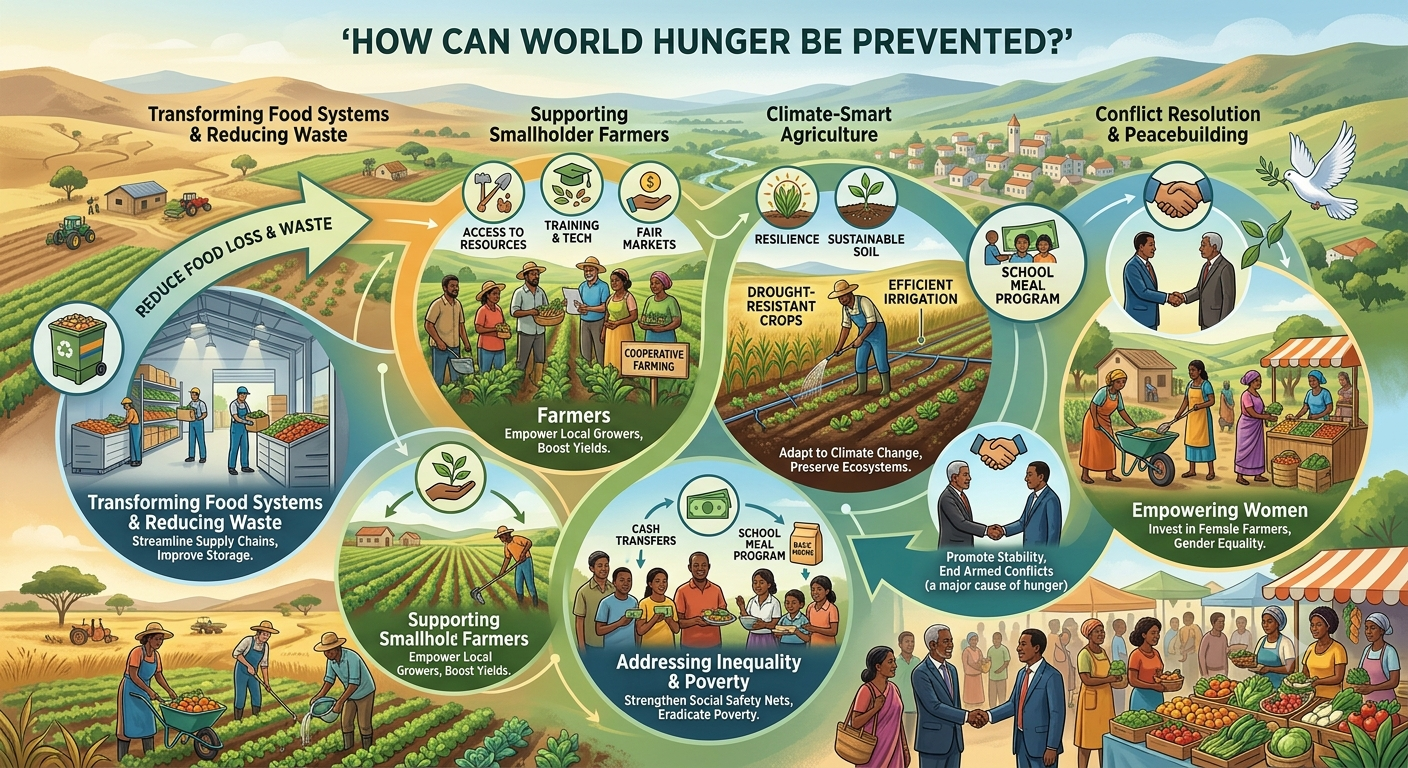
1. Transforming Food Systems & Reducing Waste
- Cut Food Loss and Waste: Roughly one-third of all food produced globally is wasted or lost. Improving supply chain logistics, cold storage infrastructure in developing regions, and consumer habits in wealthier nations can significantly boost the available food supply.
- Support Smallholder Farmers: Small-scale farmers produce a massive portion of the world’s food, especially in developing countries. Providing them with access to affordable seeds, tools, training, credit, and fair markets increases local yields and incomes.
2. Strengthening Climate Resilience & Agriculture
- Climate-Smart Farming: Climate change causes severe droughts, floods, and unpredictable weather that destroy crops. Investing in drought-resistant crops, efficient irrigation techniques, and sustainable soil management helps safeguard food supplies against environmental shocks.
- Diversifying Crops: Over-reliance on a few staple crops (like wheat, maize, and rice) makes food supplies vulnerable. Promoting resilient, nutrient-dense regional crops (such as millet, sorghum, and legumes) improves stability and nutrition.
3. Addressing Conflict & Economic Inequality
- Peacebuilding & Humanitarian Aid: Conflict is currently the leading driver of severe hunger worldwide. Protecting trade routes, upholding international law during wartime, and funding emergency food programs (like the UN World Food Programme) save lives in crisis zones.
- Social Safety Nets: Poverty prevents people from buying food even when it is available. Government safety nets—such as direct cash transfers, school meal programs, and subsidized food assistance—ensure that vulnerable populations can afford basic nutrition.
4. Empowering Women & Local Communities
- Gender Equality in Agriculture: Women make up a large portion of the agricultural workforce, yet often face barriers to owning land, obtaining loans, or receiving education. Closing the resource gap for female farmers could significantly increase crop yields and reduce global hunger.
- Empowerment Through Education: Educating communities on sustainable land management, market dynamics, and proper nutrition leads to long-term economic independence.
The Big Picture: Preventing hunger isn’t just about growing more food—it’s about making sure food is grown sustainably, distributed fairly, and accessible to everyone, regardless of income or geography.
Which specific area—such as agricultural technology, economic policy, or local community programs—would you like to explore further?








Post Comment
You must be logged in to post a comment.