Why do women get their period?
At its core, a period (or menstruation) is the body’s natural way of resetting the reproductive system each month. It’s essentially a sign that a woman’s body is functioning normally and preparing for the possibility of pregnancy.
Here is a breakdown of how it actually works behind the scenes:
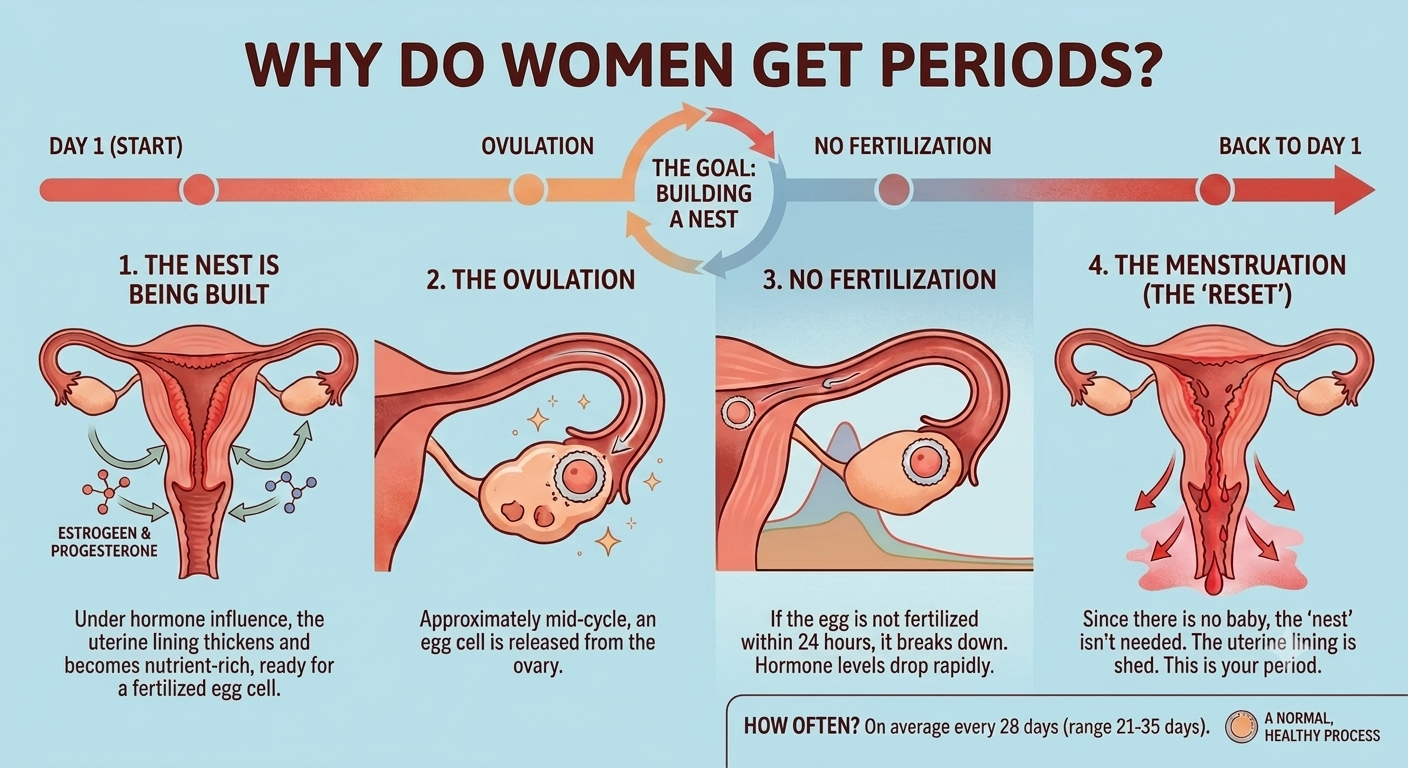
1. Preparing the Nest
Every month, the ovaries release hormones (mainly estrogen and progesterone). These hormones signal the uterus to grow a soft, blood-rich lining (the endometrium). Think of this lining as a cozy nest built to support and nourish a fertilized egg if pregnancy occurs.
2. Ovulation
About halfway through the monthly cycle, one of the ovaries releases a mature egg in a process called ovulation. The egg travels down the fallopian tube toward the uterus, waiting to be fertilized.
3. The Signal to Reset
- If the egg is fertilized by a sperm, it attaches to that plush uterine lining, pregnancy begins, and periods pause.
- If the egg is not fertilized, the body realizes it doesn’t need the extra lining that month.
4. The Period Happens
Because pregnancy didn’t occur, hormone levels drop sharply. This drop triggers the uterus to shed its unused lining. The blood and tissue that made up the lining exit the body through the vagina—and that flow is what we call a period.
Once the lining is shed, hormone levels start to rise again, and the whole cycle begins anew!
Did you know? The average menstrual cycle lasts about 21 to 35 days, and the period itself usually lasts between 3 to 7 days. Every person’s body has its own unique rhythm.