Are drugs good for you?
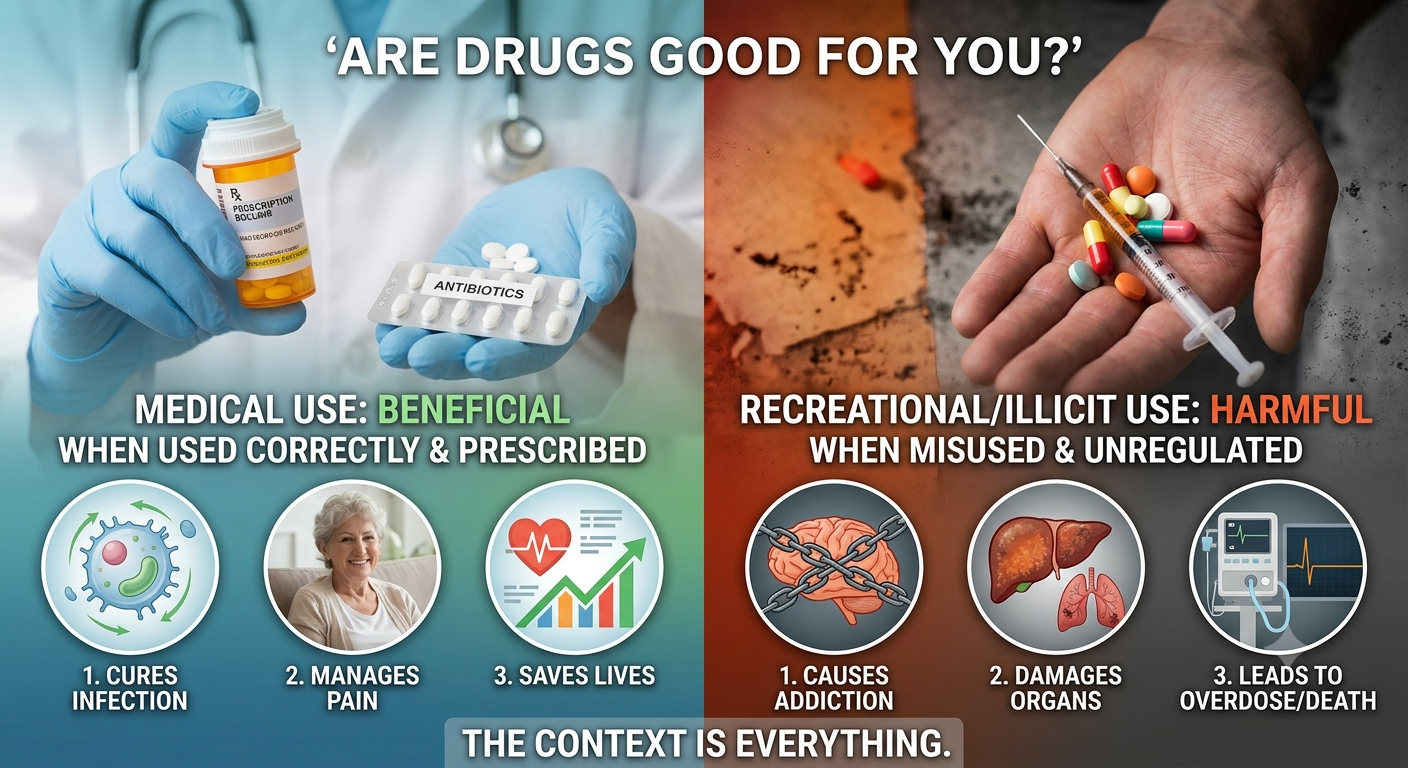
Whether a substance is “good for you” depends entirely on the specific substance, how it is used, and the individual circumstances. There is no simple answer that applies to all “drugs.”
The word “drug” is very broad, covering everything from life-saving medical treatments to substances with high potential for harm.
When Drugs are Good for You (Medical Use)
In a medical context, drugs are tools used by healthcare professionals to prevent, treat, and cure diseases. In this context, they are clearly “good” for you because they are designed to improve health and save lives.
Examples of highly beneficial drugs when used correctly:
- Antibiotics: Cure severe bacterial infections that were once fatal.
- Insulin: Saves the life of people with Type 1 and advanced Type 2 diabetes.
- Vaccines: Prevent serious and sometimes deadly diseases like polio, measles, and COVID-19.
- Painkillers: Allow for surgery and make it possible to live with severe chronic pain.
- Psychiatric medications: Help manage conditions like depression, anxiety, and schizophrenia.
The key to these substances being “good” is that they are carefully studied, regulated, and prescribed by experts who weigh the benefits of treatment against potential side effects.
When Drugs are Not Good for You (Misuse and Addiction)
Any substance can be harmful if misused. The definition of a substance as “not good” usually involves a high potential for abuse, addiction, and serious physical or mental health consequences.
Drugs can be harmful when:
- They are used incorrectly: Taking a prescription drug without a doctor’s guidance or in a way not intended can be dangerous.
- They have a high potential for addiction: Substances like opioids, methamphetamine, and heroin can cause severe dependency, which destroys lives.
- They lead to immediate harm: An overdose of many substances, including alcohol, can be fatal. Long-term use of certain drugs can damage the brain, liver, heart, and other organs.
- They impair judgment and coordination: Substances like alcohol and many recreational drugs increase the risk of accidents and dangerous decisions.
Even legal, common substances like alcohol and nicotine (found in tobacco and vapes) fall into this category. They have high potential for harm, leading to cancer, heart disease, and addiction, and are not considered “good for you” in any health sense.
The “Gray Area”: Tolerance, Individual Response, and Modern Research
The line between “good” and “bad” is not always clear-cut:
- Caffeine: A very common drug that is mostly safe and can improve focus in moderation, but can cause anxiety, sleep problems, and a form of dependency in excess.
- Cannabis: Increasingly used medically to manage chronic pain, nausea from chemotherapy, and some forms of epilepsy. However, recreational use, especially in young people, can affect brain development and increase the risk of psychosis in vulnerable individuals.
- Psychedelics (e.g., Psilocybin): Emerging research suggests that substances like psilocybin, when used in controlled, therapeutic settings, may be highly effective at treating severe, treatment-resistant depression and PTSD. This doesn’t mean they are safe for recreational use, but they may soon be recognized as “good” in a new medical context.
Final Summary
The ultimate takeaway is that the “goodness” of a drug is entirely dependent on its use.
- Medical and therapeutic drugs, used under expert guidance to treat or prevent illness, are incredibly beneficial and “good” for humanity.
- The misuse of any substance, whether it’s an illegal drug, a misused prescription, or a common addictive substance, carries significant risks of harm and is generally “bad” for your health.





Post Comment
You must be logged in to post a comment.