Where does it grow in the world?
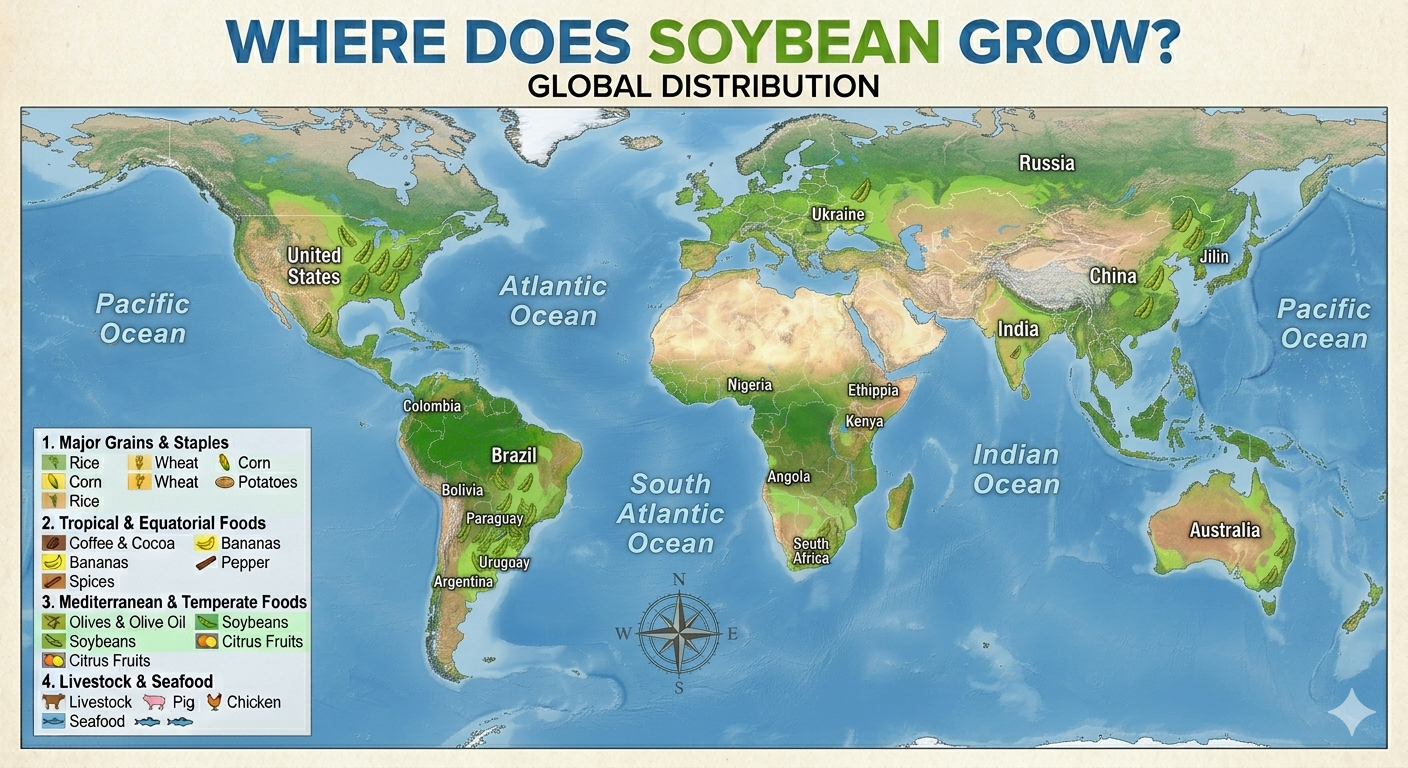
Here is a breakdown of where the world’s major food staples are primarily grown:
1. The Major Grains & Staples
These crops form the backbone of the human diet and are grown in massive quantities across global “breadbaskets.”
- Rice: Thrives in warm, wet climates. About 90% of the world’s rice is grown in Asia, predominantly in China, India, Indonesia, and Bangladesh.
- Wheat: Prefers cooler, temperate climates. The top producers are China, India, Russia, the United States, and Canada.
- Corn (Maize): Incredibly versatile but thrives in temperate zones with hot summers. The United States (specifically the Midwest “Corn Belt”) is the largest producer, followed by China and Brazil.
- Potatoes: Native to the Andes, potatoes love cooler climates. Today, China, India, Ukraine, and Russia lead global production.
2. Tropical & Equatorial Foods
These foods require year-round warmth and high humidity, meaning they are almost exclusively grown in the bands near the equator.
- Coffee & Cocoa: Grown in the “Bean Belt” around the equator. Brazil, Vietnam, and Colombia dominate coffee, while West Africa (Ivory Coast and Ghana) produces the majority of the world’s cocoa.
- Bananas: Thrives in tropical regions. India and China are the largest producers for domestic use, while Ecuador, the Philippines, and Guatemala lead the world in exports.
- Spices (like black pepper, cinnamon, and vanilla): Heavily concentrated in South and Southeast Asia (India, Indonesia, Vietnam) and Madagascar.
3. Mediterranean & Temperate Foods
These regions have hot, dry summers and mild, wet winters, which are perfect for specific high-value crops.
- Olives & Olive Oil: Heavily concentrated around the Mediterranean basin. Spain, Italy, and Greece produce the vast majority of the world’s supply.
- Soybeans: Though a versatile legume, they are heavily cultivated in temperate and subtropical parts of the Americas. Brazil and the United States produce roughly 70% of the world’s soybeans.
- Citrus Fruits (Oranges, Lemons): Grown in warm, subtropical regions like Brazil, China, and the U.S. (Florida and California).
4. Seafood and Livestock
- Livestock (Beef, Pork, Poultry): Distributed worldwide, but large-scale production is concentrated in countries with vast grazing lands or massive grain surpluses to feed animals, notably the U.S., China, Brazil, and the European Union.
- Seafood: Sourced globally from oceans, but aquaculture (fish farming) has exploded in recent decades, with China producing more farmed fish than the rest of the world combined.





Post Comment
You must be logged in to post a comment.