What will AI bring in the future?
Gesprek met Gemini
What will AI bring in the future?
The short answer is that artificial intelligence is moving us from an era where tech is just a tool we use, to an era where tech acts as a partner carrying out complex intentions.
Because AI is developing rapidly across multiple industries, here is a breakdown of what it is bringing—and will continue to bring—to our daily lives, work, and world:
1. Hyper-Personalized Daily Life & Education
- Autonomous AI Agents: Instead of just asking an AI to write a draft, future AI agents will execute end-to-end multi-step tasks. You might say, “Plan a 5-day trip to Portugal within my budget,” and it will coordinate flight options, book hotel stays, and craft custom daily itineraries autonomously.
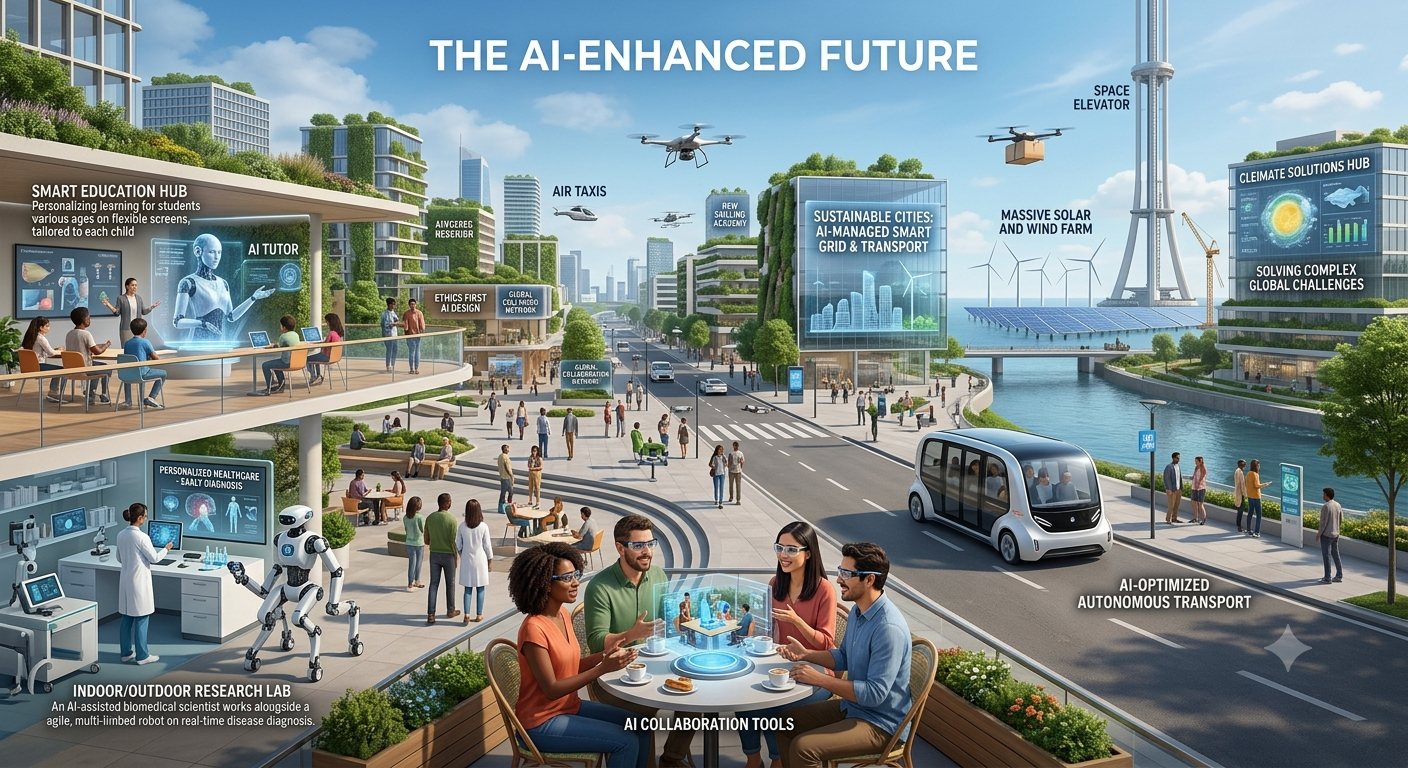
Tailored Education: Classrooms will shift away from one-size-fits-all curricula. AI tutors will adapt real-time lesson plans to an individual student’s unique learning style, pace, and interests.
2. A Revolution in Healthcare & Science
- Accelerated Drug Discovery: What used to take a decade in medical trials and lab research can be compressed into months. AI models are mapping complex protein structures and predicting chemical interactions to design new life-saving drugs.
- Early Medical Diagnostics: AI algorithms analyzing medical imaging (X-rays, MRIs, retinal scans) will catch diseases like cancer or Alzheimer’s years before physical symptoms manifest.
3. The Shift in the Workplace
- Shift to “Orchestration”: Rather than replacing human creativity, AI will shift roles. Workers will spend less time doing repetitive administrative work (data entry, scheduling, baseline coding) and more time acting as directors or “orchestrators” guiding AI outputs.
- New Job Categories: Just as the internet created jobs no one in the 1980s could conceive (like cloud architects or app developers), AI is creating entirely new fields centered on AI safety, agent management, and human-machine interaction.
4. Physical Robotics & Transportation
- Smarter Embodied AI: Combining advanced AI software with physical hardware means safer self-driving transportation, automated warehouse logistics, and eventual household helper robots.
- Smart Infrastructure: Cities will use real-time AI to manage power grids, optimize traffic flows, and reduce energy consumption.
Key Challenges Society Must Solve
With all this capability, AI also brings pressing social and ethical friction points that humanity is currently navigating:
- The Reality of Information: With deepfakes and hyper-realistic synthetic media becoming effortless to make, society will have to build new digital trust infrastructures.
- Economic Disruption: While new jobs will open up, the rapid pace of change means workforce retraining programs and safety nets will be essential.
- Resource & Energy Demands: Training and running massive AI models requires vast amounts of electricity and water, forcing tech companies to heavily invest in renewable energy solutions.